Residential Road Maintenance Hub
Your complete guide to understanding private road laws, forming road associations, and managing maintenance costs across all 50 states.
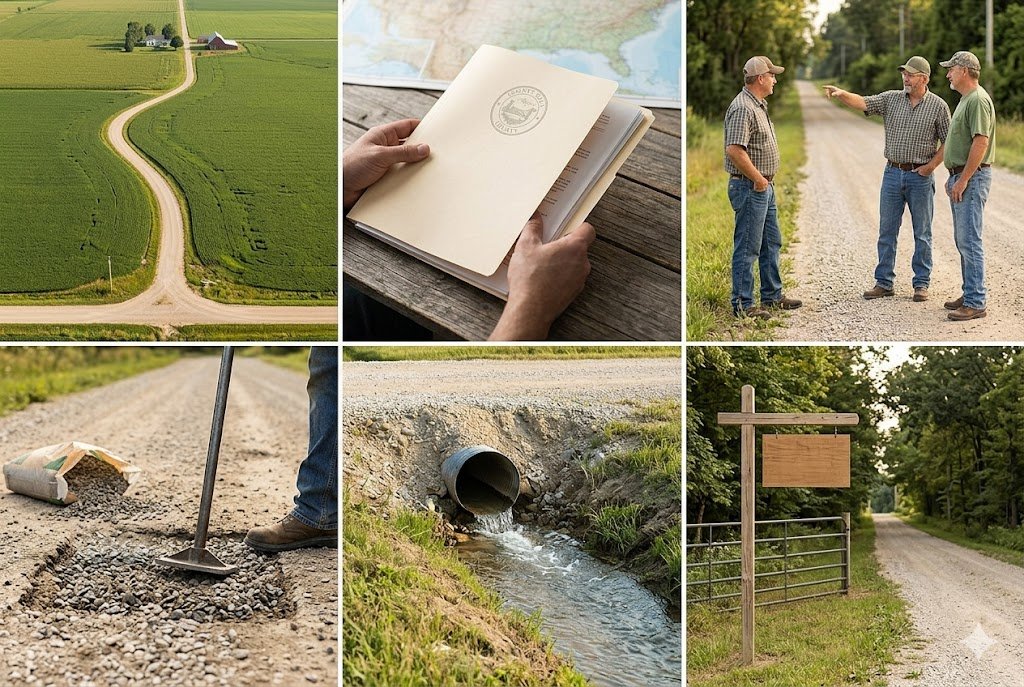
What You'll Learn
📋 State-Specific Laws
Understand private road regulations, easement requirements, and maintenance obligations specific to your state.
Explore States →💰 Cost-Sharing Models
Learn three proven methods for fairly splitting road maintenance costs among neighbors.
Learn More →🏛️ Road Associations
Step-by-step guide to forming and managing a road maintenance association in your state.
Get Started →⚖️ Legal Rights
Know your rights and responsibilities as a private road owner or easement holder.
Understand Rights →🔧 Maintenance Basics
Essential maintenance tasks, seasonal checklists, and when to hire professionals.
View Checklist →📊 Interactive Tools
Use our FairShare Calculator to determine equitable cost distribution for your road.
Calculate Now →Quick Facts About Private Roads
Who Maintains Private Roads?
Private road owners and easement holders are responsible for maintenance. This is typically shared among all properties that use the road, either through formal agreements or road associations.
What Does "Easement" Mean?
An easement is a legal right to use someone else's land for a specific purpose (like accessing your property). Private road easements allow you to cross neighboring land to reach your home.
Popular Topics
VA Loan Requirements for Private Roads
Understand current VA loan private road maintenance agreement requirements for 2026 and how to qualify.
Read Article →Maine Road Association Formation
Step-by-step guide to forming a statutory road association in Maine with required bylaws and procedures.
Learn About Maine →Dispute Resolution for Private Roads
How to handle disagreements about maintenance costs, road improvements, and neighbor disputes.
Resolve Disputes →Frequently Asked Questions
It depends on your state's laws and any existing agreements. If there's a written maintenance agreement or road association bylaws, all property owners typically have a legal obligation to contribute. If there's no formal agreement, you may need to pursue legal action or mediation. Some states have specific statutes that establish default maintenance obligations.
A private road typically serves multiple properties and is maintained by all users. A driveway easement is usually a narrower right-of-way for a single property. Maintenance responsibilities and legal frameworks differ between the two. Private roads often have more formal governance structures, while driveway easements may have simpler agreements.
There are three common methods: (1) Equal Split—divide total cost equally among all properties; (2) Distance-Weighted—each property pays based on their distance from the main road; (3) Usage-Based—properties pay based on estimated usage. Use our FairShare Calculator to determine which method works best for your situation.
Yes, a written agreement is highly recommended. It clarifies maintenance responsibilities, cost-sharing methods, dispute resolution procedures, and emergency access rights. Many states have specific requirements for what must be included in private road maintenance agreements, especially for mortgage lending purposes.
Responsibility depends on your agreement and state law. If a tree is on the easement itself, it's typically the road's responsibility. If it's on adjacent private property, the property owner is responsible. Your road maintenance agreement should specify procedures for handling vegetation management and emergency tree removal.
Download Resources
Private Road Maintenance Master Checklist
A comprehensive 3-page PDF covering seasonal inspection points, maintenance tasks, and meeting minute templates for road associations.
Download PDFAbout This Hub
The Residential Road Maintenance Hub is an informational resource designed to help homeowners understand private road laws, easement rights, and best practices for maintaining shared roads across all 50 states.
Disclaimer: This site provides general informational content only and does not constitute legal advice. Private road laws vary significantly by state and locality. For specific legal questions about your situation, consult with a qualified attorney licensed in your state.
For more information, see our About page and Privacy Policy.